
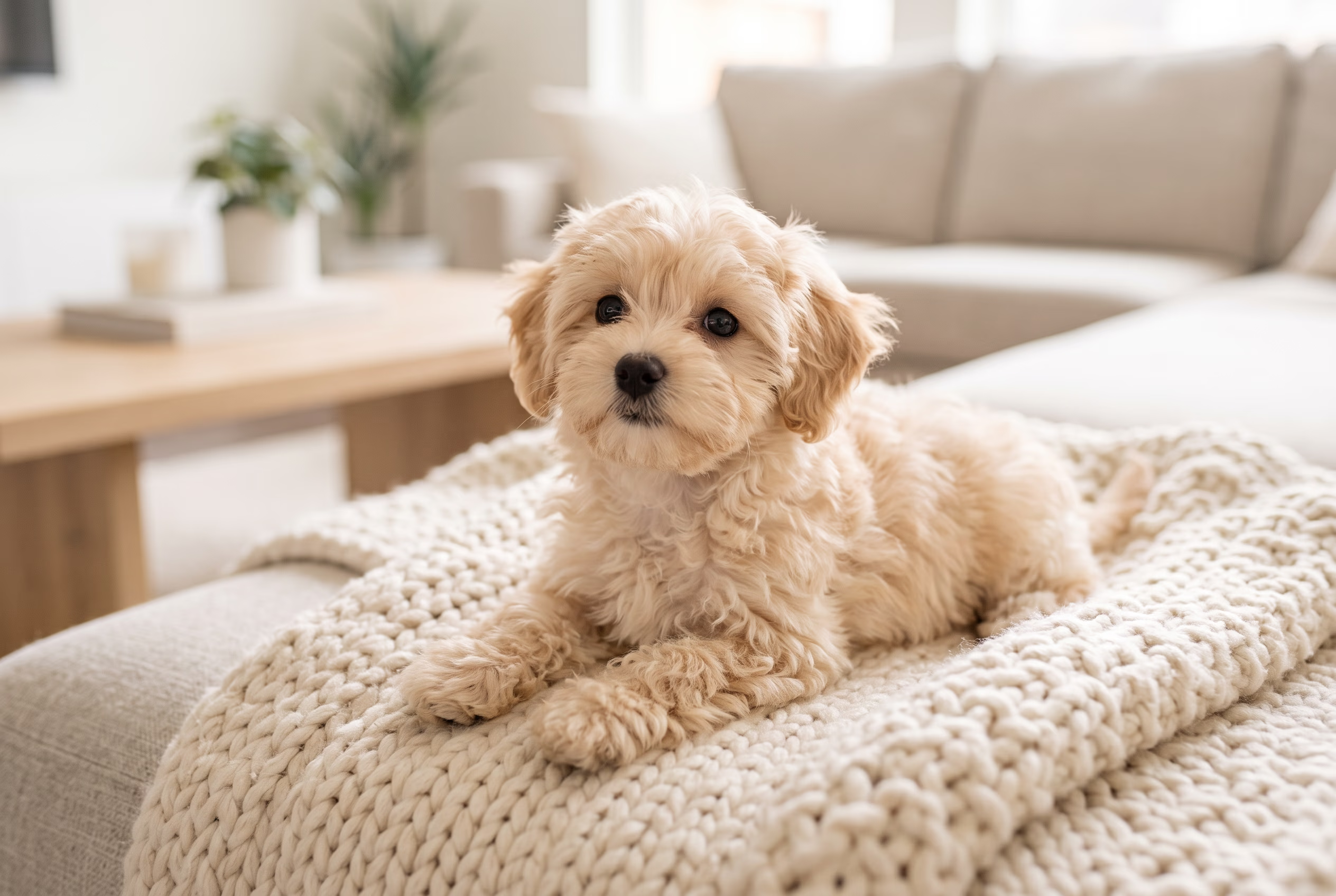
What is a Maltipoo?
The name Maltipoo is used for dogs with Maltese and Poodle parentage; the Poodle parent is commonly Toy or Miniature. The label itself is not a pedigree document or formal breed registration. The FCI lists four Poodle varieties—Standard, Medium, Miniature and Toy—but does not list Maltipoo as another Poodle variety.
Maltipoo size and physical traits
Adult appearance can vary with the size and genetics of both parents and with each puppy’s development. Marketing terms such as “teacup” or “mini” do not guarantee mature height or weight. There is no single official adult Maltipoo size or weight range. A coat may be straight and silky, wavy or curlier, and colour can also vary with inherited traits.
- Do not predict adult measurements from a photograph or a puppy’s current size alone.
- Review verifiable parent identity and health information alongside the puppy’s growth records.
- A responsible breeder or adoption organisation should be clear about what is not yet known rather than making precise genetic promises.
Maltipoo temperament, learning and socialisation
Personality is influenced by the parents, early experiences and the environment in which a puppy grows. Even littermates may differ. Gradual socialisation, reward-based positive reinforcement and short, consistent training sessions can help teach everyday skills. Consider each dog’s comfort with people, activity and unfamiliar situations individually.
- Introduce people, dogs, sounds and grooming routines calmly and at a pace the dog can manage.
- Reward wanted behaviour and avoid frightening or physical punishment.
- Teach settling and brief periods alone as well as cues; do not assume a companion mix will automatically be comfortable alone.
Apartment and family life
A routine may include daily walks, age-appropriate play, sniffing and short training activities. Apartment living can suit an individual Maltipoo, but small stature does not remove the need for movement, toileting, attention or enrichment. Some dogs alert-bark at noises or movement outside; consistent guidance can help. Consider how the dog will cope with time alone before bringing one home.
- Build alone-time gradually with short, positive practice; consult a veterinarian or qualified behaviour professional if distress persists.
- Supervise all interactions with children and provide a quiet place where the dog can rest undisturbed.
- Make the home safer against falls, accidental knocks and rough play, particularly for a small-bodied dog.
Maltipoo grooming and shedding
A Maltipoo’s coat may be straight, silky, wavy or curly depending on inherited traits. Shedding also varies by dog; low shedding is not guaranteed and does not mean low maintenance. Regular brushing helps prevent tangles from becoming mats, while professional grooming needs depend on coat length, clip and comfort.
- Check and brush the coat regularly, often daily for longer or tangle-prone coats; be gentle around mats.
- PetMD quotes a professional grooming interval of about four to six weeks as guidance, not a universal schedule for every coat or clip.
- Use grooming time to notice changes around the ears, eyes and skin; ask a veterinarian about irritation or discomfort.
Allergies and ‘hypoallergenic’ claims
A Maltipoo cannot be guaranteed completely hypoallergenic or safe for every person with allergies. Allergen exposure is not limited to loose hair, and people’s reactions differ. “Low-shedding” does not mean a dog will not trigger symptoms. Anyone with allergies should discuss their situation with a health professional and, where possible, spend controlled time with the particular dog before making a decision. That experience is not a medical guarantee.
Nutrition and everyday care
Food and portions should reflect age, activity, body condition and health. Ask a veterinarian before changing food or adding supplements. Brush teeth with dog-safe products and regularly check ears, eyes, skin and nails. Keep the home safe from falls or accidental crushing, manage stairs and furniture access, and support the dog’s body when lifting.
- Provide fresh water and a calm place to eat.
- Discuss gum redness, bad breath, eye discharge or ear irritation with a veterinarian.
- Get professional help if you are unsure how to trim nails or clean ears safely.
Maltipoo health and veterinary care
PetMD lists dental disease, luxating patella and eye issues among health concerns that may affect Maltipoos. These are not conditions every Maltipoo will develop; risks depend on the individual dog and parental background. Schedule routine veterinary care and discuss oral, eye and mobility checks. Ask for both parents’ health histories and any relevant screening records. Screening can inform care and breeding decisions, but is not a health guarantee.
- Review dated records of the puppy’s veterinary examinations, vaccinations and parasite prevention.
- Ask how the parents’ eyes, patellas, teeth and general health have been assessed.
- Seek veterinary advice for limping, eye changes, oral pain or changes in appetite.
A checklist for choosing a puppy
Do not choose a puppy solely by appearance, a “teacup” label or a promised adult size. Ask the breeder for the parents’ identities and health histories, the puppy’s veterinary records and details about its rearing environment. Ask about age-appropriate social experiences and take time to decide.
- Can you meet or verify both the Maltese and Poodle parents, and review their health and veterinary records?
- Are the puppy’s examination, vaccination and parasite-prevention records dated and available?
- How has the puppy been introduced to people, household sounds and everyday handling?
- Will the breeder show the living conditions, answer questions and give you time without pressure?
- Arrange an independent veterinary examination before completing an acquisition or adoption.
Maltipoo vs Poodle: what is the difference?
A Maltipoo is a mix of Maltese and Poodle, with traits that can vary according to the inherited contribution of each parent. The Poodle is an FCI-recognized breed with four official size varieties in FCI Standard No. 172: Standard, Medium, Miniature and Toy. Maltipoo is not a fifth Poodle variety.
How to interpret these sources
Information on Maltipoo variation, care and health was checked against PetMD and Purina; official Poodle classification comes from the FCI. Google links are general guidance on helpful content and Search features, not veterinary sources.
Frequently asked questions
- How big does a Maltipoo get?
- Adult size varies with the parents and the puppy’s individual development. There is no single official adult height standard for Maltipoos, and labels are not guarantees.
- What is an adult Maltipoo’s weight?
- A fixed weight range cannot be promised. Weight depends on parent size, genetics and individual development; monitor growth with a veterinarian.
- Do Maltipoos shed?
- Shedding varies by dog and coat. Low shedding is not guaranteed, and coat care remains necessary.
- Are Maltipoos hypoallergenic?
- No Maltipoo can be guaranteed allergy-safe. People react differently, and even dogs that shed less can trigger symptoms.
- Can a Maltipoo live in an apartment?
- It may suit apartment life if daily movement, play, toileting routines and companionship are provided. Barking and alone-time skills should also be considered.
- Are Maltipoos good with children?
- Compatibility depends on the individual dog and child. Supervise interactions and give the dog a secure place to rest.
- How often does a Maltipoo need grooming?
- Regular coat checks and brushing—often daily for longer or tangle-prone coats—help prevent mats. PetMD cites professional grooming around every four to six weeks as guidance, but the right interval varies.
- What health problems can affect Maltipoos?
- PetMD notes dental disease, luxating patella and eye issues as possible concerns. They will not occur in every dog; veterinary care and parent health records matter.
- Is a Maltipoo an official Poodle variety?
- No. It is a Maltese–Poodle mix. The FCI recognizes Standard, Medium, Miniature and Toy Poodle varieties.