
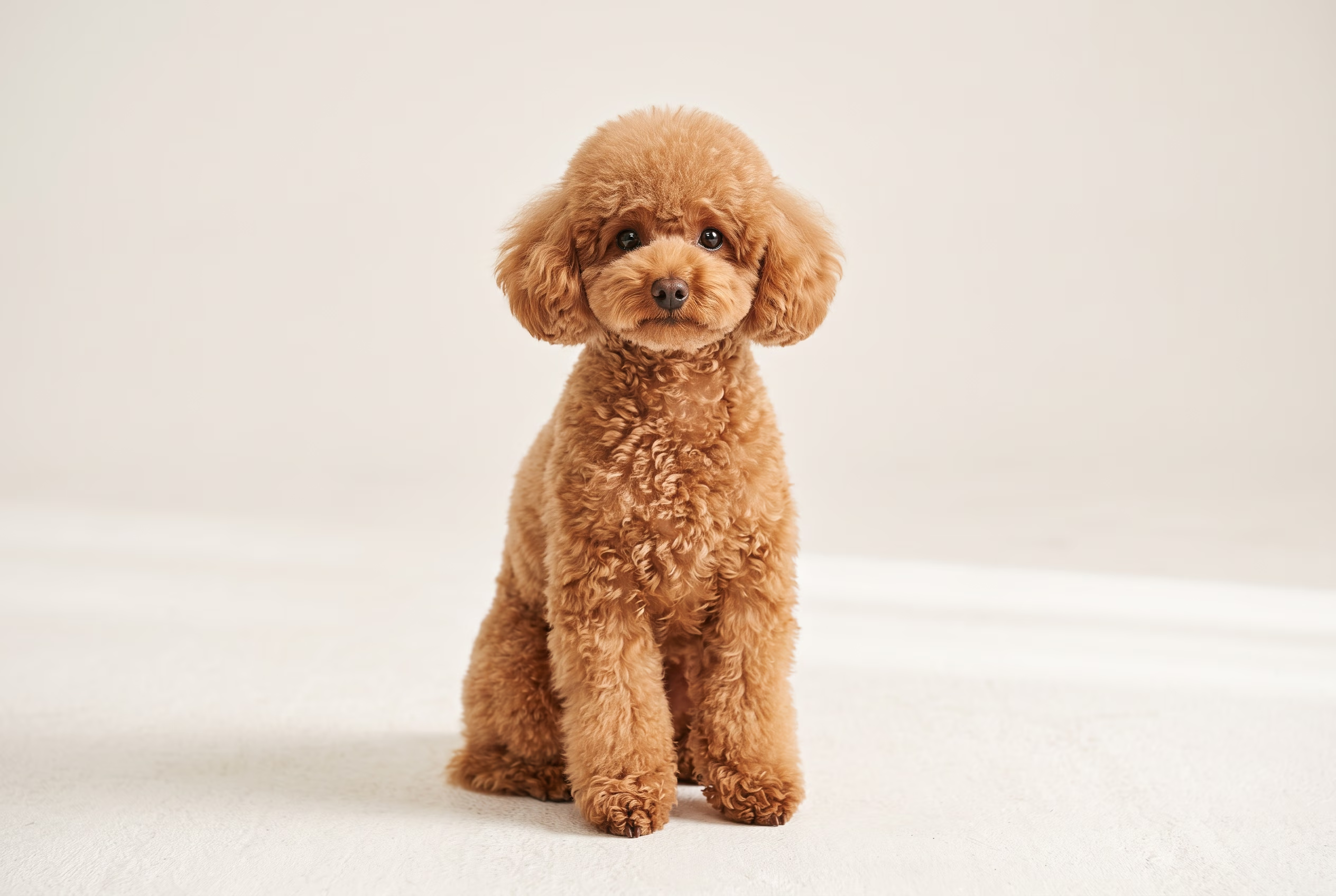
Toy Poodle size and appearance
Size labels depend on the registry. The FCI standard describes Toy Poodles as over 24 cm, with a 1 cm tolerance below, up to 28 cm; its ideal height is 25 cm. The Poodle Club of America’s AKC-style chart places Toys at 10 inches (about 25.4 cm) or less at the shoulder. These are different classification systems, and neither predicts the mature height of a particular puppy.
- The FCI describes the Poodle coat as curly or corded, dense and woolly in texture.
- The FCI standard lists solid black, white, brown, grey and fawn shades, including apricot and red.
- Breed-standard measurements describe the variety; a puppy’s development and family records matter when discussing likely adult size.
Temperament, learning and daily activity
The FCI standard describes the Poodle as intelligent and capable of learning and training. That does not mean every Toy Poodle will have the same temperament, nor that a small dog needs little engagement. Plan daily movement, play, rest and mental enrichment around the individual dog’s age and health.
- Teach basic skills in short, consistent, reward-based sessions.
- Introduce people, sounds, surfaces and other animals gradually, paying attention to the dog’s comfort.
- Balance walks and play with rest; ask your veterinarian about an activity plan suited to your dog.
Apartment living and family fit
A Toy Poodle’s size may suit a range of homes, but apartment compatibility is about more than square footage. Noise responses, toilet training, daily activity, time alone and the dog’s individual needs all matter. Build comfort with being alone gradually in a safe environment rather than suddenly extending absences.
- Supervise interactions with children and other animals, and give the dog a quiet place to retreat.
- Agree on gentle handling rules with everyone in the household; protect a small dog from being dropped, squeezed or overwhelmed by rough play.
- Keep a predictable routine and a safe resting area available.
Toy Poodle grooming and everyday hygiene
A dense, curly coat can tangle and mat as it grows. The right routine depends on coat length, chosen clip, home brushing and skin condition. Plan regular coat checks and professional grooming, but do not assume one fixed appointment interval suits every dog.
- Check and gently brush through the coat to the skin; do not pull at mats, and seek professional help when needed.
- Check ears, nails and teeth routinely; ask your veterinarian to demonstrate suitable care methods.
- Make grooming easier by introducing handling in short, positive sessions from puppyhood.
Feeding and safety at home
Food amounts depend on age, body condition, activity and the food itself. Ask a veterinarian for an individual feeding plan, measured portions and a weight-monitoring routine. Also review home hazards for a small dog, including high furniture, stairs, door gaps and the risk of being underfoot.
- Choose a balanced diet appropriate to the dog’s life stage; do not start supplements or a therapeutic diet without veterinary advice.
- Support the dog safely when carrying or playing, and do not encourage jumps from high surfaces.
- Keep potentially toxic foods, medicines and small swallowable objects out of reach.
Toy Poodle health and veterinary screening
No single test provides a complete picture of a dog’s future health. For Toy Poodles, the Poodle Club of America Foundation recommends a PRA-prcd DNA test from an OFA-approved laboratory, a yearly eye examination by a board-certified ACVO veterinary ophthalmologist, and an OFA or PennHIP patellar evaluation. These are screening and record-keeping measures, not diagnoses; they do not cover every condition or guarantee that a puppy will remain healthy. Discuss appropriate examinations with a veterinarian.
- Ask whose PRA-prcd result is documented, which laboratory performed it and how the result can be verified.
- Check the date and veterinary ophthalmologist details for eye examination records.
- Ask which parent received a patellar evaluation and request the associated record.
- Plan routine preventive care and individual health questions with your veterinarian.
Toy Poodle versus “Teacup” or “Micro”
Toy is one of the Poodle varieties in the FCI standard. “Teacup” and “Micro” are not listed as separate Poodle varieties by the FCI; when used in listings or everyday marketing, these labels are not formal classifications, proof of a particular adult size or health documentation. Unusually small size is not a health guarantee. Assess size expectations through verifiable family and veterinary records rather than a label alone.
Sources
Questions to ask when choosing a puppy
Take time to evaluate the puppy and the records. Documents cannot guarantee future health or temperament, but they help you make a decision based on verifiable information.
- Can I review the puppy’s current veterinary examination, vaccination and parasite-treatment records?
- Can I confirm the parents’ identities and see records for recommended Toy Poodle health screening?
- Where is the puppy being raised, and what safe, age-appropriate contact with people has it had?
- What feeding, growth-monitoring and transition-to-home information will be provided?
- What veterinary records and follow-up information are available if a health concern arises?
Responsible ownership is a long-term commitment
Living with a Toy Poodle involves ongoing grooming, training, veterinary costs and daily time. Consider your household, budget and capacity for care before deciding. Do not rush if someone avoids questions, will not show records or pressures you to commit. If you are unsure about fit, speak with a veterinarian or a reputable animal-welfare organization.
Sources
The following references informed the breed-standard, size, care and health-screening information in this guide.
Frequently asked questions
- How tall is an adult Toy Poodle?
- The FCI standard gives a withers height of over 24 cm (with a 1 cm tolerance below) up to 28 cm for the Toy variety. The Poodle Club of America’s AKC-style chart places Toy Poodles at 10 inches (about 25.4 cm) or less. The classifications differ, and neither can determine an individual puppy’s exact adult size.
- Do Toy Poodles shed, and are they suitable for people with allergies?
- A coat description or breed label cannot guarantee an allergy-free experience. The AKC describes the Toy Poodle coat as low-allergen, but individual reactions vary and no dog should be treated as allergy-proof. If allergies are a concern, consult a health professional before deciding.
- Can a Toy Poodle live in an apartment?
- It can, but success depends on exercise, training, noise responses, toilet routines and a plan for time alone, as well as the dog’s individual needs and the building environment.
- Can Toy Poodles be left alone at home?
- This depends on the dog’s age, experience and individual tolerance. Teach alone time gradually in a safe setting. For a puppy or a dog showing signs of distress, discuss an appropriate support plan with your veterinarian.
- Are Toy Poodles good with children and other pets?
- Compatibility varies by dog and by how introductions are managed. Because Toy Poodles are small, interactions with children and other animals should be calm, controlled and supervised by an adult.
- How often should a Toy Poodle be brushed or professionally groomed?
- The interval depends on coat length, clip and tangling. Check and brush the coat regularly, then agree on a suitable professional grooming schedule with an experienced groomer and your veterinarian.
- Are Teacup or Micro Poodles official varieties smaller than Toy?
- The FCI standard does not list those terms as Poodle varieties. In listings, they do not establish a precise adult size or guarantee health.