
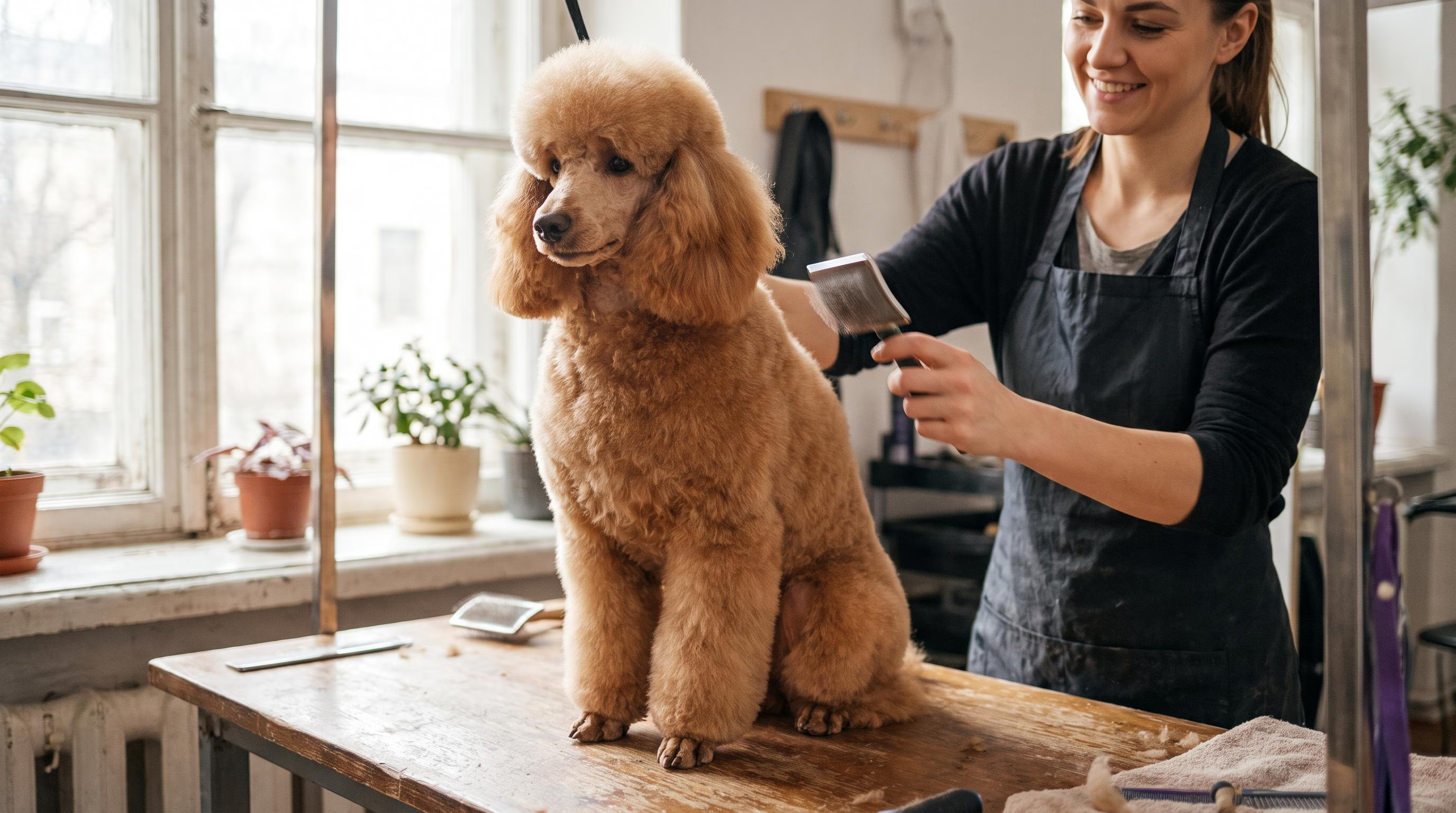
What does pet grooming involve?
Pet grooming, sometimes called dog grooming, describes routine care for a dog's coat and hygiene as well as its appearance. The right approach depends on coat type, length, tangles, health history and care at home. Do not assume a salon offers a particular treatment; ask about its scope and limits before booking.
- Brushing and checking for tangles as part of ongoing home care.
- Bathing and careful drying with products suitable for the dog.
- Trimming or styling to keep the coat manageable, chosen for the individual dog.
- Observing nails, paws, ears and skin, with veterinary care for health concerns.
Coat type changes the care routine
Curly or long coats can tangle and may need regular brushing. Short-coated dogs still benefit from checks for loose hair, dirt and skin changes. A double coat has distinct layers that should be considered before any trimming; one grooming approach does not suit every dog. Choose a brush or comb for the coat's length and density.
- Work gently through curly or long coats in small sections rather than pulling at the skin.
- For short coats, keep an eye on shedding, dirt and changes to the skin.
- Before clipping a double coat, ask a professional familiar with that coat type.
- Ask a veterinarian about redness, sores, sensitivity or unusual hair loss noticed during brushing.
Brushing and preventing mats
Gentle, consistent brushing at home can help you notice tangles before they become larger. Mats often develop in areas where the coat rubs, and tight tangles close to the skin can pull and cause discomfort. Do not try to cut close mats with scissors: skin folds can be hidden in the coat. Ask a professional to assess extensive or tight matting, and discuss stopping if the process causes pain or distress.
- Choose tools for the coat and use a light touch.
- Do not force brushing if your dog is uncomfortable, even with a small tangle.
- For widespread or skin-close matting, ask a groomer about safe options; consult a veterinarian if the skin is irritated or injured.
Bathing, products and drying
Bath frequency varies with a dog's coat, skin and activities; there is no single schedule for all dogs. Use products made for dogs and suited to the animal's coat and skin, and rinse them out thoroughly. Take care around the face and ears so water or product does not enter the eyes or ear canal. Adjust the heat and airflow during drying for the dog's comfort.
- If your dog has itching, redness, odor or sensitive skin, ask a veterinarian before trying a new product.
- Choose products for the dog's individual coat and skin rather than relying on breed labels alone.
- After bathing, carefully dry the coat and skin, especially dense or folded areas.
Choosing a trim or style
A haircut should not be selected on appearance alone. Coat structure, skin condition, how manageable the routine will be at home and the dog's comfort during the process all matter. If a dog has a double coat, ask specifically whether clipping is suitable rather than applying a universal rule. For matted coats, agree on a safe plan with a professional who can assess the dog's skin and comfort.
- Describe the look you want and ask what is practical and what care it will require.
- Discuss how the coat may grow back and whether its texture could change for that dog.
- Do not continue a procedure solely for appearance if the dog is frightened or in pain.
Nails, ears and paws
Checking nails, paw pads and ears can be part of routine care, but trimming or cleaning is not the same for every dog. Cutting a nail too short can hurt and bleed. If you notice ear odor, discharge, redness, head shaking or pain when touched, do not treat it as a grooming issue; ask a veterinarian. Seek veterinary help for a suspected wound or foreign object in a paw as well.
Preparing for a first grooming visit
A first appointment does not have to include every treatment at once. Tell the groomer what care your dog has experienced and what it currently tolerates; ask whether a brief introduction or gradual plan is possible. Age, vaccination and acceptance requirements vary by provider, so do not assume one salon's policy applies everywhere.
- Share health history, skin sensitivities, allergies, medication and any veterinary restrictions.
- Mention previous fear, attempts to escape, snapping or difficult grooming experiences.
- Ask which procedures are proposed, what products are used and what happens if your dog struggles.
- Confirm the provider's process, price, appointment and cancellation terms directly; none are verified by this site.
Stress signals and safe handling
Freezing, trying to move away, vocalizing, trembling or defensive reactions can be signs that a dog is struggling; none of these alone is a diagnosis. Ask whether the process can pause, be shortened or be changed. If a dog seems painful, a skin injury is found or distress increases, the procedure should stop while the owner is informed and veterinary advice is considered when appropriate.
Grooming frequency depends on the dog
There is no fixed interval for professional pet grooming that fits every dog. Coat type and length, how quickly it mats, season, lifestyle, home brushing and the dog's tolerance all matter. Discuss a routine with someone who can see the coat in person. Sudden changes to skin or hair should be discussed with a veterinarian rather than addressed only through a grooming appointment.
Sources and editorial approach
The care guidance is limited to AKC material on coat types and grooming, and AAHA information about veterinary assessment and animal comfort. Google's pages below are not pet-care sources; they are included only as publishing guidance for clear, reliable, people-first information. No search ranking or AI-result visibility is promised.
Frequently asked questions
- How often should I take my dog to a groomer?
- It depends on coat type, length, matting, home brushing and the dog's comfort. Ask a professional who can assess your dog's coat to suggest an individual routine rather than following a universal schedule.
- When should a puppy have its first grooming visit?
- There is no single age or vaccination rule for every provider. Begin with brief, gentle experiences such as brushing and handling paws, then ask the salon and your veterinarian about its acceptance requirements and whether the first visit can be introductory.
- Should I have my dog shaved for summer?
- That depends on the coat and the individual dog; do not assume a double-coated dog should be shaved. Ask a professional who can assess the coat, and consult a veterinarian if there is a skin or health concern.
- How often should a dog be bathed?
- Bathing needs vary with the coat, skin, activities and how dirty the dog gets. Over-bathing or using unsuitable products can irritate some dogs, so ask a professional or veterinarian about an appropriate routine.
- Can I cut a large mat out at home with scissors?
- Avoid cutting close mats with scissors because skin can be hidden in the tangle. Ask a groomer to assess extensive or tight matting; if the skin is sore or injured, contact a veterinarian first.
- Can a pet groomer trim my dog's nails?
- Some providers may offer nail trimming, but this project's service scope has not been verified. Ask who performs it and under what conditions. Pain, bleeding, unusual nail shape or intense fear calls for veterinary guidance.
- Which shampoo should I use for sensitive skin?
- The cause of sensitivity and suitable products vary by dog. If there is redness, itching, a wound or a recurring skin problem, ask your veterinarian before trying a product; do not assume human shampoo is suitable.
- What should I tell a groomer before an appointment?
- Describe mats, health and skin sensitivities, medication, previous grooming experiences and situations your dog finds difficult. Ask what procedures and products are planned, along with the provider's price and appointment terms.
- Does Kore Poodle provide pet grooming?
- The project has not verified a Kore Poodle grooming salon or specific grooming services. The existing WhatsApp link may be used for an enquiry; sending a message does not confirm service availability, price or an appointment.
Looking for information about grooming?
Ask on WhatsAppThis existing link is for enquiries only. A Kore Poodle grooming salon or specific procedures have not been verified; a message does not confirm a service or appointment.